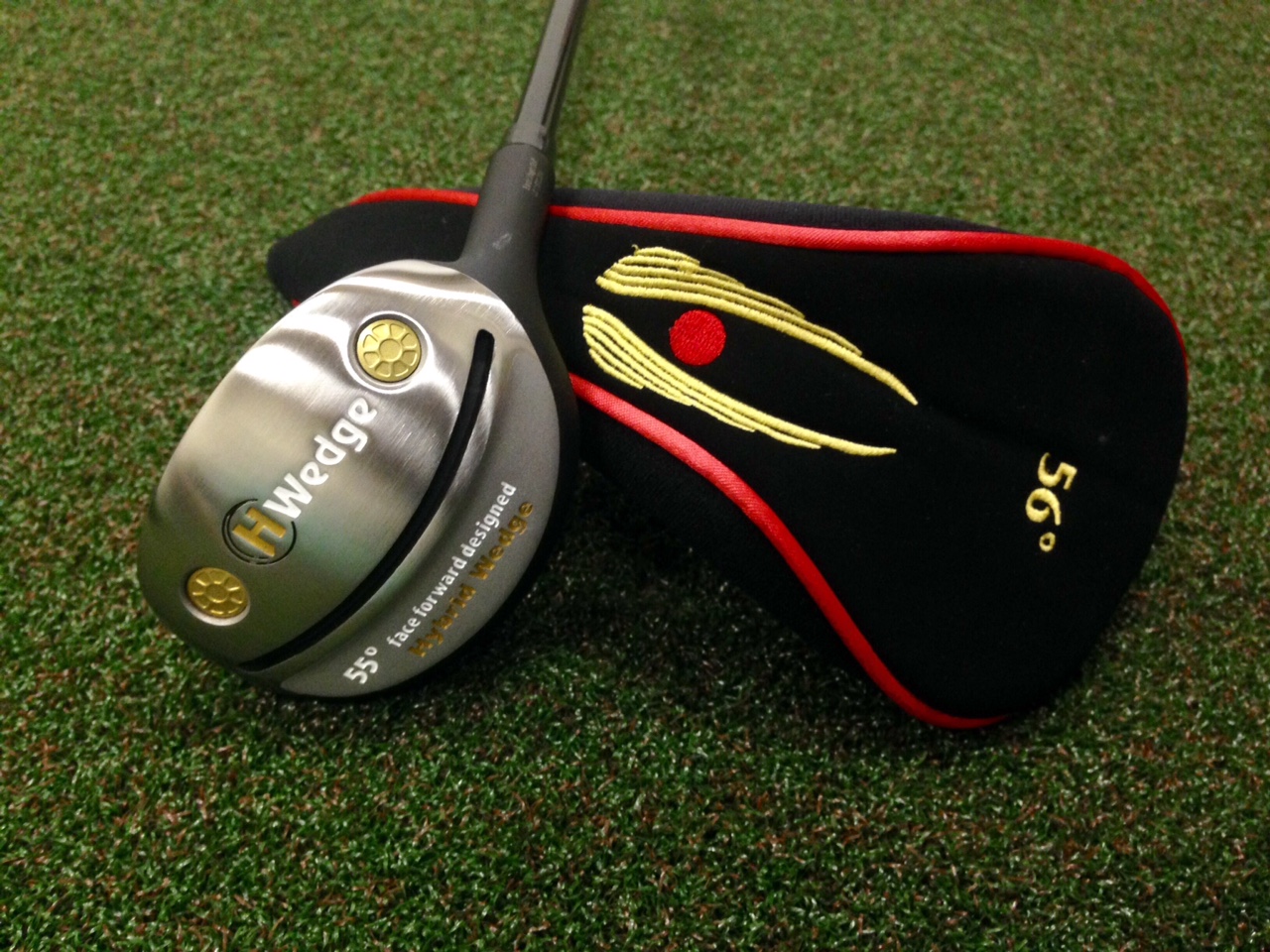
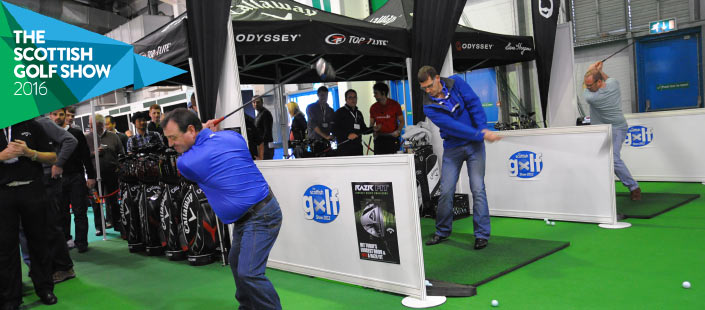
We are delighted to announce that we will be launching the all new HWedge by Black Magic Golf to follow-up to the highly successful Black Magic Wedges at the Scottish Golf Show in Glasgow from the 18th March.
We have chosen the Scottish Golf Show for the launch due to the high volume of golfers who always attend the show and the attention that it receives from the golf industry in general.
The Black Magic Hybrid HWedges gives the golfer the ultimate confidence in their short game that will improve their scores and reduce their handicaps.
If you struggle to get out of bunkers with any consistency these are the perfect solution because you will get out of bunkers at the first attempt every time.
This is because the Black Magic Hybrid HWedges have very little resistance to the heavy rough and of course sand.
These clubs make it almost impossible to hit those duff shots that cost the average golfer so many shots around the green and out of bunkers and send their handicaps sky high.
The Black Magic Hybrid HWedges are so designed to prevent the dreaded shanks that are so demoralising and destroy the golfers’ confidence.
As Hybrid long irons have revolutionised the game of golf the Black Magic Hybrid HWedges have enabled so many golfers who struggle with their short game to knock many shots off their rounds. The pleasure of not worrying about those annoy shots that are frittered away around the green have boosted so many golfers confidence
HWedges are guaranteed to improve your short game
All Black Magic Wedges conform to USGA and R&A Rules
There are many online sites that are excellent for keeping up-to-date with Golf news. Here are just a few of the best sites to follow the goings on in golf across the globe:
The BBC is one of the largest broadcasting companies in the world with correspondents operating across the world to bring you the latest news in an instant. Their Sports site has been providing up-to-date sports coverage since launching in 2000, as well as archiving published stories since the launch that are easy to access with their “Search†bar.
You can find out which golf competitions are being broadcast across the next seven days by checking out their TV schedule or Radio schedule. There is also an online/interactive schedule that includes details of Red Button coverage. The BBC has provided a link to livesportontv.com for finding sport on channels other that the BBC.
If you have an RSS feed reader, the BBC Golf page has feeds for the latest news as well as video and audio, allowing you to access the latest information without having to spend time hunting for it. Simply scroll down to the bottom of the Golf home page and subscribe. How handy!
Sky Sports is another excellent website for providing breaking news of worldwide golf coverage, including pages dedicated to the Masters, European, and US Tour.
You can follow the latest golf news from the Sky Sports Golf page and for those that are social network savvy, up-to-date news is provided on their Twitter, Facebook and Google+ pages. Sky Sports also provides an RSS feed for instant access to Golf news.
If you enjoy going to the pub to watch the golf, Sky has provided a clever pub finder to help you easily find a venue. Another lovely little bonus from Sky Sports is their free online Golf Challenge game.
Golf Today has been providing extensive golf content since 1996, reaching 6 million golfers across the globe. They feature 65,000+ pages of golfing content, including information on where to play, golf holidays and golf tuition.
Their home page features the latest golf news and latest equipment news amongst other articles of interest or for a simple and easy way of keeping in touch with the latest news, you can sign up to their newsletter.
If you are keen on working in the industry, the website also features a useful Jobs page.
Golf Monthly is the world’s oldest monthly golf magazine having been established in 1911. Not only does Golf Monthly offer a monthly printed magazine which you can subscribe to or purchase at a newsagent, their website offers an abundance of golf information as well as the latest news.
Equipment video reviews are available on the website as well as a fantastic forum where you can keep in touch with other avid golfers about anything to do with the industry (including buying and selling of used equipment, arranging games with forum members, and an “Ask the Experts†section, to name but a few topics).
Along with its sister magazine Golf World, Today’s Golfer is one of the best-selling golf magazines in the UK. They aim to help golfers play better, buy better and find the best places to play.
As well as providing the latest, up-to-the-minute news on equipment, events, tournaments (such as Masters 2013) and golf courses, Today’s Golfer website publishes weekly competitions with prizes such as golf holidays or signed clubs as well as a Blog page with regular articles from Gary Wolstenholme, David West and retired cricket legend, Freddie Flintoff whom is planning on taking up the game seriously.
Today’s Golfer also provides a Golf Advice and Golf Chat forum, a section on how to improve your golf and information on 2-Fore!-1, the UK’s largest and best discount golf scheme.
In order to take part in certain golfing competitions and events, you need to ensure that your golfing equipment meets the guidelines laid out by the R&A.
The R&A (Royal and Ancient Golf Club of St Andrews) formed in 2004 and is responsible for organising The Open Championship and other amateur and junior events, as well as ensuring the Rules of Golf are administered correctly throughout Europe, Africa, Asia-Pacific and the Americas.
Golf Clubs
General
General wear of a club through normal use conforms to rules set by the R&A. There are penalties set out for carrying clubs or making a stroke with a club that does not conform.
At the start of a stipulated round (unless stated otherwise by the Committee, this is a round of 18 holes played in the correct sequence), the player is not permitted to carry more than 14 clubs, nor add or borrow any selected for play by another player on the course. Partners may share clubs providing that their combined total does not exceed 14. Penalties apply for breach of the rules.
If a club is damaged during normal course of play, use of the club throughout the stipulated round is permitted or may be repaired as long as play is not unduly delayed. Another club may replace the damaged club providing it does not breach rules. If a club is damaged from means other than normal course of play, it may not be replaced or used during the round. Prior to a round, if the club is damaged it may be used or repaired if conforming to the rules.
During a stipulated round, foreign material must not be added to the club face to influence the movement of the ball and the playing characteristics of the club must not be adjusted.
Design
Golf clubs must meet the specifications provided by the R&A. If the design of a club is not covered by the R&A, it will be ruled against.
As stated in R&A rules, a golf club is an implement used to strike the ball and comes in three types; woods, irons and putters. These different forms are distinguishable by their shape and use. The loft of a putter should not exceed 10° and the club itself is designed for use on the putting green.
Clubs must consist of a shaft and a head. Material can be added to enable a firm hold but no other external attachments are permitted (exceptions may be permitted if the attachment does not affect the performance of the club). All club components must be fixed together to make one whole unit.
Weight adjustment features may be incorporated into the club providing that they meet R&A rules. The adjustment itself cannot be readily made and any adjustable parts need to be fixed so that they do not come loose during a round. During a stipulated round, the playing characteristic of the club must not be altered by adjustment or any other means.
The length of the club must be at least 18 inches (0.457 m) and except for putters, no longer than 48 inches (1.219 m). Length and alignment of the club is imperative.
Shaft
From the top of the grip to no more than 5 inches above the sole, the shaft must be straight. The shaft must twist the same amount in both directions and the shaft must bend so that deflection is the same regardless of the rotation of the shaft along its longitudinal axis.
The putter’s shaft or neck or socket may be fixed at any point in the head.
Grip
Material added to the shaft for grip to enable a firm hold must be straight and plain. It must be fixed to the shaft, extending to the end and not moulded for any part of the hand. This grip portion of the shaft must be held by the player if there isn’t any material added.
The grip may be tapered but without bulges and the cross-sectional dimension must not exceed 1.75 inches (44.45 mm). Except for the putter, grip must be circular in cross-section. A slight raised rib is permitted as long as it is continuous and straight. A slightly indented spiral is also permitted on a wrapped grip. The grip must coincide with the shaft axis.
For a putter, if symmetrical and no concavity, a non-circular cross-section along the length of the grip is permitted. Two circular grips are permitted if separated by at least 1.5 inches (38.1 mm) and their axes coincide with the shaft axis.
Clubhead
The clubhead must be plain in shape, rigid, functional and structural in nature. It must have only one striking face except for a putter which may have two of the same characteristic. The clubhead must not have the effect of a spring that exceeds the limit set by the Pendulum Test Protocol (this does not apply to putters), incorporate technological features (for example, separate spring features) or have an unduly influence on the motion of the ball.
There is a non-exhaustive list of modifications (such as holes etc.) that breech the R&A rules.
Dimensions, volume and moment of inertia of the clubhead depend on the type of club.
Club Face
The club face must be hard and rigid. With some exceptions made for putter, the club face must not impart significantly more or less spin on the ball. The impact area must be of the same material and the roughness must not exceed the effect of decorative sandblasting or fine milling. Except for some markings, the face must be smooth and not have any degree of concavity.
The Ball
The ball must not be significantly different from the traditional and customary form or make. It must weigh no more than 1.620 ounces avoirdupois (45.93 g) and must be no less than 1.680 inches (42.67 mm) in diameter.
The ball must be symmetrical and spherical. It must not be manufactured, designed or modified intentionally to have properties that differ from this.
There is a limit to initial velocity of the ball. This is specified by the R&A under conditions set forth in the Initial Velocity Standard for golf balls.
Combined carry and roll must not exceed The Overall Distance Standard for golf balls, specified by the R&A.
Foreign material must not be added to the ball with the purpose of changing its characteristics.
Visible cuts, cracks or misshapen balls are deemed unfit for play. Adhesion of mud or other materials, scratches, discoloured or damaged paint does not deem the ball unfit for play.
A player may lift the ball during play and replace it with another if there is reason to believe the ball has become unfit for play. Intention to do so must be announced opponent, marker or fellow competitor prior to lifting the ball. One penalty stroke will be incurred if the ball is lifted without reason or without complying with the rules.
Other Devices and Equipment
A tee may be used to raise the ball of the ground and must not exceed 4 inches in length, unduly influence the motion of the ball, indicate line of play by design or manufacture or assist the player’s stroke in any other way.
Gloves, shoes and clothing worn by players must conform to the guidelines set by the R&A.
Unless a Local Rule is set out by the Committee, distance measuring devices are not permitted during a stipulated round. If the Local Rule permits distance measuring devices, some devices do not conform to the guidelines and must not be used.
If you are unsure of whether your equipment meets guidelines set by the R&A, you should consult the R&A for further information.